Managing a tour operation without the right software is like navigating without a map, you move, but rarely efficiently. Bookings come in through emails. Itineraries are built on spreadsheets. Payments are tracked manually. Suppliers are chased over WhatsApp. And somewhere in that chaos, a double-booking slips through.
This is the daily reality for thousands of travel businesses still running on disconnected tools and manual processes.
Tour operator software changes that entirely.
Whether you operate a small adventure company, a large DMC, or a multi-destination group tour provider, this guide will explain in detail what tour operator software is, what it needs to do, and how to pick a platform that really suits your business - not just your budget.
By the end of this guide, you will know:
Tour operator software is an end-to-end management platform that allows travel businesses to build, sell, and operate tours from a single system. It brings together bookings, itinerary development, supplier management, customer information, payments and documentation for the back office, all replacing the patchwork of spreadsheets, emails, and strangled tools that most operators
In short: it is the operating system for your tour business.
This is one of the most common points of confusion in the travel tech space, and understanding this can save you from costly missteps.
A booking engine is merely the front end, the interface where customers look for availability and make purchases on your site. Other than that, it is not very useful.
Tour operator software is the entire operation, front to back. It includes a booking engine, but extends far deeper, into itinerary building, supplier contracts, package costing, agent and B2B management, CRM, reporting, invoicing, vouchers, and workflow automation.
Think of a booking engine as the storefront. Tour operator software is the storefront, the warehouse, the accounting department, and the customer service desk, all connected and working in sync.
If your current setup requires you to touch three or four different tools to complete a single booking, you do not have a system. You have a workaround. Tour operator software eliminates that entirely.
The travel industry is not waiting for anyone to catch up.
According to the World Travel & Tourism Council's 2025 Economic Impact Report, global travel and tourism closed 2025 with a record breaking contribution of $11.7 trillion to global GDP, accounting for 10.3% of the world economy. One in every three new jobs created worldwide in 2025 was linked to the tourism sector. The market is not just getting better; it’s getting different. All the fastest growing companies in business have one common factor: They have moved from manual processes to intelligent, automated ones.
Every hour your team spends building itineraries in spreadsheets, chasing supplier confirmations over email, or reconciling payment records across disconnected tools is an hour not spent selling, not spent improving the customer experience, and not spent scaling.
The unseen costs of manual process are realized quickly:
These are not edge-case problems. They are the daily operational reality for any tour business running without purpose-built software, and in 2026, the market is far too competitive for that to be sustainable.
The travelers coming through your pipeline in 2026 are fundamentally different from those of five years ago. Phocuswright's Global Travel Market Report says that by 2026, 65% of all global travel bookings are projected to happen online. These are customers who research fast, compare options side by side, and expect instant confirmation. A slow, manual booking process not only annoys them, but it also makes them go to a competitor.
Phocuswright's Travel Forward: Data, Insights & Trends for 2026 shows that online travel bookings have reached more than $1 trillion globally, and they are growing faster than offline channels in every region of the world. The change is not coming. It is already here.
Meanwhile, the same Phocuswright research reports that more than 80% of travel startups now report meaningful AI adoption — making automation the new operational baseline across the industry, not a competitive differentiator. The businesses investing in tour operator software today are not early adopters anymore. Everyone else is falling behind.
The question is no longer whether to automate your tour operations. It is how quickly you can do it before the gap between you and your competition becomes impossible to close.
Not all tour operator software is built equally. Some platforms handle bookings well but fall apart at the back-office level. Others excel at packaging but lack the reporting tools you need to make informed business decisions. Before you evaluate any platform, you need a clear picture of what non-negotiable features look like, and why each one matters.
Here are the ten features every serious tour operator software must include
Your booking engine is the initial interaction your customers have with your product. It needs to manage live availability, instant pricing and payment collection effortlessly and without your team having to get involved in every transaction.
What to look for: multi-product support across tours, hotels, transfers, and activities; mobile-responsive design; real-time inventory updates; and a checkout flow that does not leak customers at the payment step.
Creating travel itineraries by hand in Word or PDF is one of the most labour-intensive jobs in tour operations. Dedicated itinerary management solutions enable operators to build, customize and distribute professional itineraries in a matter of minutes — sourcing from pre-loaded content, supplier information and package templates on an automated basis.
Features to watch for: drag-and-drop day-by-day itinerary building, automatic document generation, multi-language output and the ability to generate client-ready proposals with one click.
FIT (Fully Independent Travel) packaging is where most manual operations break down. Building customized packages for individual travellers across multiple suppliers — each with their own rates, availability, and terms — is operationally brutal without a dedicated package management module.
What to look for: dynamic rate calculation, add-on and upgrade management, margin control per service line, and the ability to apply promotions at the package level without rebuilding the entire quote.
Every tour operation runs on supplier relationships — hotels, guides, transport companies, activity providers. Managing those contracts, rates, allotments, and cancellation policies across spreadsheets is how pricing errors and double-bookings happen.
A dedicated supplier management module centralizes all contract data, flags expiring agreements, and connects directly to your booking and costing engine — so your rates are always accurate, and your team is never quoting from outdated files.
Your repeat customers are your most valuable asset. A built-in CRM connects every enquiry, quote, booking, and communication to a single client profile, giving your team full context at every touchpoint rather than piecing together a conversation history from three different inboxes.
What to look for: enquiry tracking from first contact to booking, automated follow-up triggers, booking history per client, and agent-level access controls so the right people see the right information.
If your tour business deals with international travellers, which most do, then handling multiple currencies and payments is not something you can ignore. It becomes a basic part of running your operations smoothly. A good system should take care of currency conversion at both the rate and booking level, while also supporting enough payment options so customers can pay the way they prefer.
What to look for: real time forex rate management, support for regional payment gateways, and a reconciliation process that does not require you to manually convert currencies later.
You cannot manage what you cannot measure. The right tour operator software gives you a clear view of your business, from booking volumes and revenue by product to conversion rates, supplier costs, and agent performance. And it does all of this without forcing your team to export data into spreadsheets every week just to understand what is going on.
What to look for: real time dashboards, customizable report templates, easy export options, and the ability to go from a high level number down to the exact booking behind it.
Connectivity is the single biggest difference between a scalable tour operation and one that hits a ceiling. Whether you need to pull live hotel rates from Hotelbeds, connect flight inventory via Travelport or Sabre, or distribute your products through Viator and Bokun, your software must support robust API integration without requiring a custom development project for every new connection.
What to look for: pre-built integrations with major GDS, bed banks, activity suppliers, and payment gateways — plus a clean API layer for custom connectivity where needed.
Every confirmed booking generates a chain of back-office tasks: voucher generation, supplier confirmation, invoice creation, payment tracking, and document dispatch. In a manual workflow, each of those steps requires human intervention. In a well-built system, they happen automatically.
Signature's back-office operations module handles the full post-booking workflow — from automated communication documents and vouchers to booking management and operational task tracking — so your team focuses on exceptions, not routine paperwork.
What to look for: automated voucher and confirmation dispatch, invoice generation tied to booking status, and a clear audit trail on every document sent.
Your operations team does not sit at a desk all day. Guides need real-time manifest updates. Sales managers need to check booking status on the road. Senior leadership needs performance visibility without logging into a desktop system.
Mobile accessibility, whether through a responsive web interface or a dedicated app, is no longer a premium feature. It is a baseline operational requirement in 2026.
Features tell you what a system does. Benefits tell you what your business looks like after you implement it. These are two very different conversations — and the second one is the one that actually matters when you are evaluating a platform.
Here is what changes when a tour operation moves from disconnected tools to purpose-built software.
The average tour operations team spends a disproportionate amount of its working week on tasks that software should be handling — building quotes manually, sending confirmation emails one at a time, reconciling payment records, chasing supplier acknowledgements, and updating spreadsheets that are already out of date by the time they are finished.
Tour operator software eliminates the majority of that workload through automation. Quotes are generated from pre-loaded rates. Confirmations are dispatched the moment a booking is completed. Vouchers are produced automatically. Supplier communications are triggered by booking status changes — not by someone remembering to send an email.
The hours recovered do not disappear. They get reinvested into selling, relationship-building, and growing the business.
Manual processes do not just cost time — they cost accuracy. When pricing lives in one spreadsheet, availability in another, and booking records in a third, discrepancies are not a risk. They are a certainty.
A centralised tour operator system maintains a single source of truth across every part of your operation. Inventory is updated in real time. Rates pull directly from contracted supplier data. Every booking is logged against live availability — which means double-bookings become structurally impossible, not just unlikely.
For a tour business where a single operational error can result in a refund, a reputational complaint, or a lost client relationship, this is not a marginal improvement. It is a fundamental shift in how reliably the business runs.
This is the benefit that matters most to scaling businesses. Without software, every new booking adds roughly proportional workload to your team — more quotes to build, more confirmations to send, more suppliers to coordinate. Growth becomes a staffing problem.
With the right tour operator software, that relationship breaks down. Your booking engine sells around the clock without staff involvement. Your back-office automation handles post-booking workflows at scale. Your team manages exceptions — not volume. The result is a business that can grow its revenue without growing its headcount at the same rate.
Speed and accuracy are the two things modern travellers judge a tour operator on before they have even experienced the product. A customer who receives an instant booking confirmation, a professionally formatted itinerary, and proactive communication at every stage of their journey is a customer who feels confident in their purchase — and who comes back.
Tour operator software makes that level of experience consistent and automatic, not dependent on which team member happens to be handling the booking that day.
Gut instinct is not a growth strategy. The tour operators who scale successfully do so because they understand which products are selling, which suppliers are costing them margin, which agents are performing, and which markets are converting — in real time, not at the end of a quarterly review.
Built-in reporting and analytics turn your booking data into actionable intelligence. You stop reacting to your business and start directing it.
One of the most common misunderstanding about tour operator software is that it is only meant for a certain kind of business, usually larger companies. In reality, the challenges this software solves exist at every level, whether you are a small operator or a growing one. The need stays the same, only the way the software is set up changes.
Here is how different types of tour businesses benefit, and what each one should focus on at their stage.
For small, independent operators, capacity often poses the biggest hurdle. When a team consists of just a couple of people juggling every task, time quickly becomes the scarcest asset. Time spent on manual admin eats into hours that could otherwise go toward sales, refining travel experiences, or staying engaged with customers.
At this point, tour operator software doesn’t need to be overly complex. It should set up quickly, be simple enough to use without constant tech support, and bring bookings, itineraries, and supplier management into a single platform rather than scattering tasks across multiple apps.
The benefits often become apparent right away. You can respond to inquiries faster, minimize booking errors, and present your business in a much more polished way, something that typically requires a bigger team to pull off.
Choosing the right software doesn’t make a small operation seem small. It makes it appear sharp and professional.
Mid-size operators and Destination Management Companies face a different set of pressures. The business has grown beyond what spreadsheets and email threads can reliably support, but the complexity of operations has grown with it. Multiple product lines, B2B agent relationships, multi-currency transactions, and high booking volumes create coordination challenges that only a fully integrated system can resolve.
At this level, the priority shifts from basic automation to operational coherence, ensuring that every department, from sales to operations to finance, is working from the same data in real time. Sriggle's Destination Management Software is purpose-built for this environment, with centralized management, integrated billing, and the supplier connectivity that DMCs depend on to run efficiently at scale.
The B2B dimension also becomes critical here. Mid-size operators typically manage a network of travel agents and corporate clients, each with their own pricing structures, booking permissions, and reporting requirements. A B2B travel portal layer, integrated directly with the core system, handles this without creating a parallel workflow for your team to manage.
The market for tour operator software is crowded. Every platform claims to be comprehensive, easy to use, and built specifically for businesses like yours. Cutting through that noise requires asking the right questions, not of the vendor, but of your own operation first.
Here is a structured framework for making a decision you will not need to reverse in eighteen months.
Tour operator software is not one-size-fits-all at the product level. A platform built primarily for day tours and activities will struggle with complex FIT packaging. A system optimized for group departures may lack the flexibility a DMC needs for bespoke itinerary building. Before you evaluate any platform's interface or pricing, confirm it has been built — not just adapted — for the type of product you actually sell.
Ask vendors directly: "Show me how a customer books [your specific product type] from start to finish." The answer will tell you everything.
Most software vendors sell you the end state — a fully configured, smoothly running platform. What they understate is the distance between signing a contract and reaching that end state. Implementation timelines, data migration requirements, staff training, and go-live support vary enormously between platforms.
Ask for a realistic implementation timeline from a recent client in a comparable business. If the vendor cannot or will not provide one, treat that as a signal.
The most powerful platform in the market is worthless if your team reverts to spreadsheets three weeks after go-live because the system is too complex to use under pressure. Usability is not a secondary concern — it is a primary success factor.
Request a live demo with your actual workflows, not a scripted walkthrough of the vendor's preferred use cases. Put your operations team in front of it, not just your leadership.
Your tour operator software does not exist in isolation. It needs to connect with your existing payment gateways, your GDS connections, your bed bank suppliers, your accounting system, and potentially your CRM. Platforms with pre-built API integrations across major travel suppliers dramatically reduce the cost and complexity of going live.
Ask for a specific list of current live integrations — not a roadmap of planned ones.
Some platforms look affordable at entry level but become significantly more expensive as booking volumes grow, as you add users, or as you require additional modules. Model your expected costs at your current size and at double your current size before you sign anything.
Per-booking fee structures in particular can erode margin at scale in ways that are not obvious from the initial pricing conversation.
Not every platform deserves a second meeting. These are the warning signs that indicate a vendor is not ready for a serious tour operation:
No live demo available. If a vendor will only show you pre-recorded walkthroughs or screenshots, it is worth asking why. A platform confident in its own product will let you explore it in real time.
Vague implementation support. "We'll be with you every step of the way" is not an implementation plan. Ask for a named onboarding contact, a documented go-live process, and a clear escalation path when things go wrong.
Hidden per-booking or per-user fees. Pricing structures that bury variable costs in the fine print are a consistent source of friction after contracts are signed. Get total cost of ownership in writing, across multiple growth scenarios, before you commit.
No API documentation. For any operation that relies on third-party supplier connectivity, the absence of clean, accessible API documentation is a fundamental technical red flag. It means integrations will be slow, expensive, and entirely dependent on the vendor's development team.
Poor response times during the sales process. How a vendor treats you when they are trying to win your business is the best available signal for how they will treat you once they have it. Slow responses, missed follow-ups, and vague answers to direct questions during the sales cycle reliably predict the support experience post-contract.
There is no shortage of tour operator software on the market. What separates platforms that genuinely serve complex travel operations from those that merely list features is depth, the depth of the architecture, the depth of supplier connectivity, and the depth of industry experience behind the product decisions.
The team behind Signature brings 30+ years of hands-on travel industry experience. That is not a marketing number. It means the platform has been shaped by three decades of real operator feedback, edge cases, and evolving industry requirements, not by a product team guessing at what tour businesses need.
Signature is a cloud-based, end-to-end travel management platform built on a modular architecture. That modularity matters practically. It means operators can implement the components their business needs today and extend into new capabilities such as MICE management, cruise booking, and B2B agent portals without ever needing to migrate to a different system as they grow.
Signature by Sriggle covers the full operational stack:
Signature — the back-office engine handling bookings, packages, operations, finance, and reporting
SigniA — a B2B white-label agent portal for managing agent networks and direct bookings
SigniP — an AI-powered partner extranet for supplier and partner management
SigniX — the API layer connecting Signature to external suppliers, GDS, and third-party systems
These are not separate products that can be added on. They are parts of the same connected system, which means that data flows smoothly between them without the problems that usually come up when multiple vendors are involved.
On the connectivity side, Signature supports over 200 live API integrations for connecting to other services. These include Sabre, Travelport, Hotelbeds, Expedia, Viator, Bokun, Stripe, and Salesforce, and they cover flights, hotels, activities, transfers, payments, and customer relationship management (CRM). For any business that relies on content from third-party suppliers, that wide range of pre-built connections makes both implementation and ongoing technical support much easier.
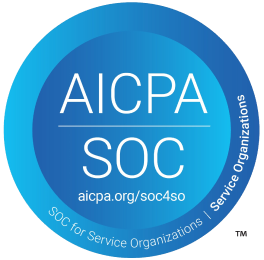
For enterprise buyers and operators handling sensitive customer payment data, compliance is non-negotiable. Signature by Sriggle holds both SOC 2 certification and ISO 27001 certification — the two internationally recognized standards for data security and information management. It is also a certified Microsoft Partner and AWS Partner, which speaks to the infrastructure reliability underpinning the platform.
Signature by Sriggle serves 100+ travel businesses across clients in 190+ countries. These companies range from small, independent operators to big travel companies. That range is important because it shows that the platform has been tested under stress at both ends of the complexity scale.
Some of those clients have talked about their experience in public. Shantanu Mehta, Executive Manager at Orient Tours UAE, said he was impressed by how flexible the system was and how much knowledge it had about the field. Krishan Singh, CEO of TUI India, talked about using the full stack of Sriggle apps and how well they worked at that level.
Verified travel industry users have given Signature by Sriggle ratings of 4.7 to 4.8 out of 5 on Capterra for ease of use, customer service, features, and value for money.
The difference between a tour company that has trouble growing and one that does so with confidence is rarely the quality of the tours they offer. It all comes down to the infrastructure that supports it.
That infrastructure is tour operator software. It's the difference between a business that runs on spreadsheets, inboxes, and people's memories and one where bookings, itineraries, supplier relationships, customer data, and financial records all work together as one system.
The operators who are winning in 2026 are not working harder than their competitors. They are working in better systems.
If this guide has helped you understand what to look for, what to avoid, and what a truly capable platform looks like in action, the next step is to stop thinking about it in the abstract and start seeing it work in your own business.
Sriggle gives you a free, personalized demo that isn't a scripted walkthrough. Instead, it's a live session that is tailored to your business, your type of product, and your specific questions.