Travel ERP software runs your agency's bookings, supplier contracts, and financial reporting through one connected system. No more spreadsheets. No more switching between a booking engine and separate accounting software. That's what "ERP" means here: real financial automation, including supplier reconciliation, accounts payable and receivable, and general ledger integration. Not just a booking screen with a sales pitch attached.
That distinction is constantly blurred. Most “Travel ERP software” platforms are booking engines with a reporting dashboard thrown on. The label on the homepage will not tell you which one you are looking at. What will: verifying the system against an actual set of criteria, rather than a list of features.
This guide outlines six criteria that distinguish a travel ERP from a rebranded booking tool. Use them to evaluate any vendor's claim against something concrete, not a glossy feature list.
Before you sit through another demo, run any travel ERP claim against these six checks:
What actually makes software an ERP instead of a booking tool? Most travel software touches bookings. Far fewer actually manage the money behind them. The "ERP" in enterprise resource planning means the finance and operations side is built in, not bolted on.
A booking engine makes a booking and stores it. A travel ERP takes it further. It balances your accounts receivable It tracks what your clients owe you. And it feeds that data into your general ledger, without someone having to re-type numbers into accounting software.
That's the true test." Ask a vendor these three questions and you’ll know in a minute whether you’re looking at an ERP or a booking tool with extra dashboards:
If the answer to any of those is "you'd need a separate tool for that", it's not really an ERP. It is an ERP-branded reservation system. OK if that's what you want. It’s just not what the word promises.
Your hotel contracts, tour packages, transfers, and activity inventory should live in one system, not four. If your team checks availability in one tool, pricing in a spreadsheet, and supplier terms in email threads, the software isn't centralizing anything. It's just a fifth tool in the pile.
Ask to see how a single supplier contract flows through the system: rate loading, allotment tracking, and booking against that inventory in real time. More than one login for that workflow means the centralization claim doesn't hold up.
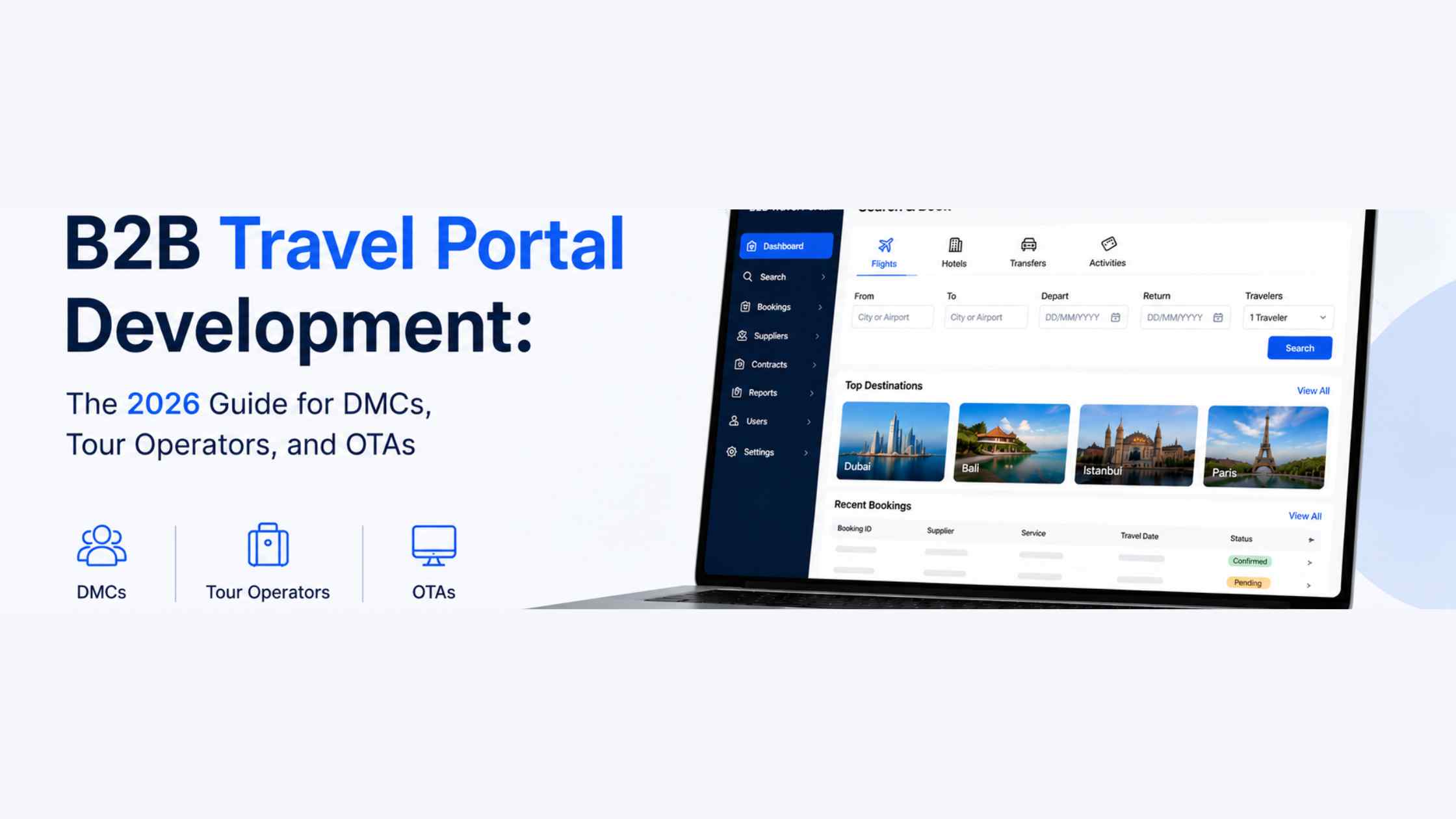
A real travel ERP needs a genuine B2B layer, not a customer-facing site with an extra login tier bolted on. That means agent-specific pricing and markups, white-label branding, and a portal pulling from the same live inventory your own team uses. Not a separate feed that goes stale.
Watch for vendors who show a B2C demo and call it B2B. The two need different permission structures. A lot of platforms fake that difference with nothing more than a color scheme change.
Count the actual live GDS and supplier connections, not the logo wall on the homepage. A platform with two working GDS integrations and honest documentation beats one claiming fifty partners it hasn't built. Ask which integrations are live in production versus "available on request." Those are two very different things.
Travel software handles payment data, passport details, and traveler personal information. That makes certification non-negotiable, not a nice-to-have.
Look for three things specifically: ISO 27001 for information security management, SOC 2 for data handling controls, and PCI DSS for payment processing. A vendor with none of these is asking you to take their word for it. A vendor with all three has been independently audited.
Don't accept a badge on a homepage as proof. Ask for the actual certificate or audit report. Vendors who are genuinely certified will hand it over without hesitation.
Two pricing models dominate travel ERP software, and they create very different incentives.
Per-booking commission models charge you a cut of every transaction. That sounds simple at first. But your booking volume grows, and your software costs grow with it, even though the vendor's actual costs don't. Per-user licensing charges a flat rate per seat instead. Your software cost stays predictable as your business grows.
Ask which model you're being quoted before you evaluate anything else. A cheap-looking entry price on a commission model can cost more than a higher-looking flat license within a year of real volume.
Signature runs on per-user annual licensing, not a per-booking commission. Cost stays predictable as your transaction volume grows, instead of scaling against you. It holds ISO 27001, SOC 2 Type 1, and PCI DSS v4.0 certification, covering the three checks outlined above.
On the operational side, Signature centralizes hotel, flight, transfer, car rental, and tour inventory in one system. A B2B agent portal is available from the Professional tier up. GDS connectivity runs through Travelport and Amadeus. Onboarding includes a dedicated manager, and most agencies go live within two weeks.
Signature isn't the only platform that clears these criteria. It's one option to run through the same six checks covered above, not a replacement for doing that evaluation yourself.